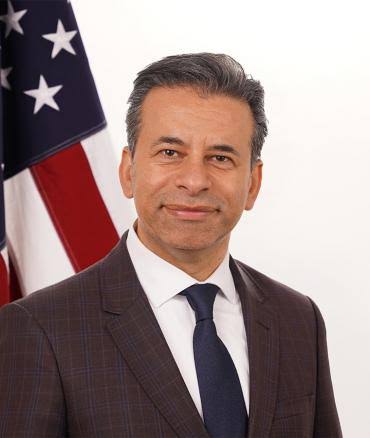
I asked our AI friends – What are the pros and cons of replacing FDA Commissioner Makary with me – here is the response?
This is a very timely question — Makary resigned as FDA Commissioner today, May 12, 2026, amid reports of internal tensions and policy clashes, with the vaping dispute reportedly being a key factor in his departure. Here’s a balanced breakdown of the hypothetical of replacing him with Bill Marler:
Who is Bill Marler?
Marler is an American personal injury lawyer specializing in foodborne illness cases and the managing partner of Marler Clark, a Seattle-based firm focused on food safety litigation. He’s represented victims in every major U.S. foodborne illness outbreak over the past three decades, securing over $850 million for clients. His most famous involvement was the 1993 Jack in the Box E. coli outbreak, and his career and advocacy were featured in the 2023 Netflix documentary “Poisoned.”
Pros of a Marler FDA Appointment
Deep, practical food safety expertise. For over 30 years, Marler has had a four-dimensional impact on global food safety systems — through litigation, advocacy, journalism, and education — and is credited with making the food industry sharper and more vigilant.
Consumer-first track record. He has petitioned the USDA to strengthen regulations on pathogenic E. coli, testified before Congress, and been a key advocate for the 2010 Food Safety Modernization Act.
Accountability culture. His career has been built on holding food companies legally responsible, which could translate into a more enforcement-oriented FDA posture on food safety — an area critics felt was underprioritized under recent leadership.
No ideological baggage on vaccines or pharmaceuticals. Unlike Makary, whose tenure was dominated by controversies over COVID vaccines and drug approvals, Marler’s expertise is squarely in food safety, which could allow the FDA’s food side to operate with less political interference.
Strong public credibility. The New Yorker has called him “the most prominent and powerful food-safety attorney in the country,” and he has wide respect across consumer, public health, and even industry circles.
Cons of a Marler FDA Appointment
No regulatory or administrative experience. The FDA Commissioner oversees a massive agency responsible for drugs, vaccines, medical devices, and food. Marler’s expertise is deep but narrow — litigation and advocacy, not agency management or regulatory science.
Drug and device blind spot. The FDA regulates one-fifth of consumer spending in the U.S., covering pharmaceutical approvals, biologics, medical devices, and more. Marler has no background in these areas, which constitute the bulk of the FDA’s work and public scrutiny.
Adversarial reputation with industry. His career has been built on suing food companies, which could create significant friction with the industries the FDA must both regulate and work cooperatively with. A regulator and a litigator play fundamentally different roles.
Political confirmation obstacles. A plaintiffs’ trial lawyer with a decades-long record of suing large corporations would likely face fierce opposition from business-aligned senators during any confirmation process.
Potential conflicts of interest. His firm, Marler Clark, has ongoing litigation against food companies. Unwinding those relationships and establishing independence from his legal practice would be complex.
Bottom Line
Marler would be a genuinely strong pick specifically for food safety — bringing credibility, consumer focus, and real-world knowledge of where the system fails. But the FDA Commissioner role is far broader than food safety, and his lack of experience with pharmaceuticals, vaccines, and agency administration would be a significant liability. A more realistic scenario might be Marler in a focused food safety leadership role (like head of the FDA’s Center for Food Safety), rather than the top job.